
Request Your Free Cheat Sheet Now:
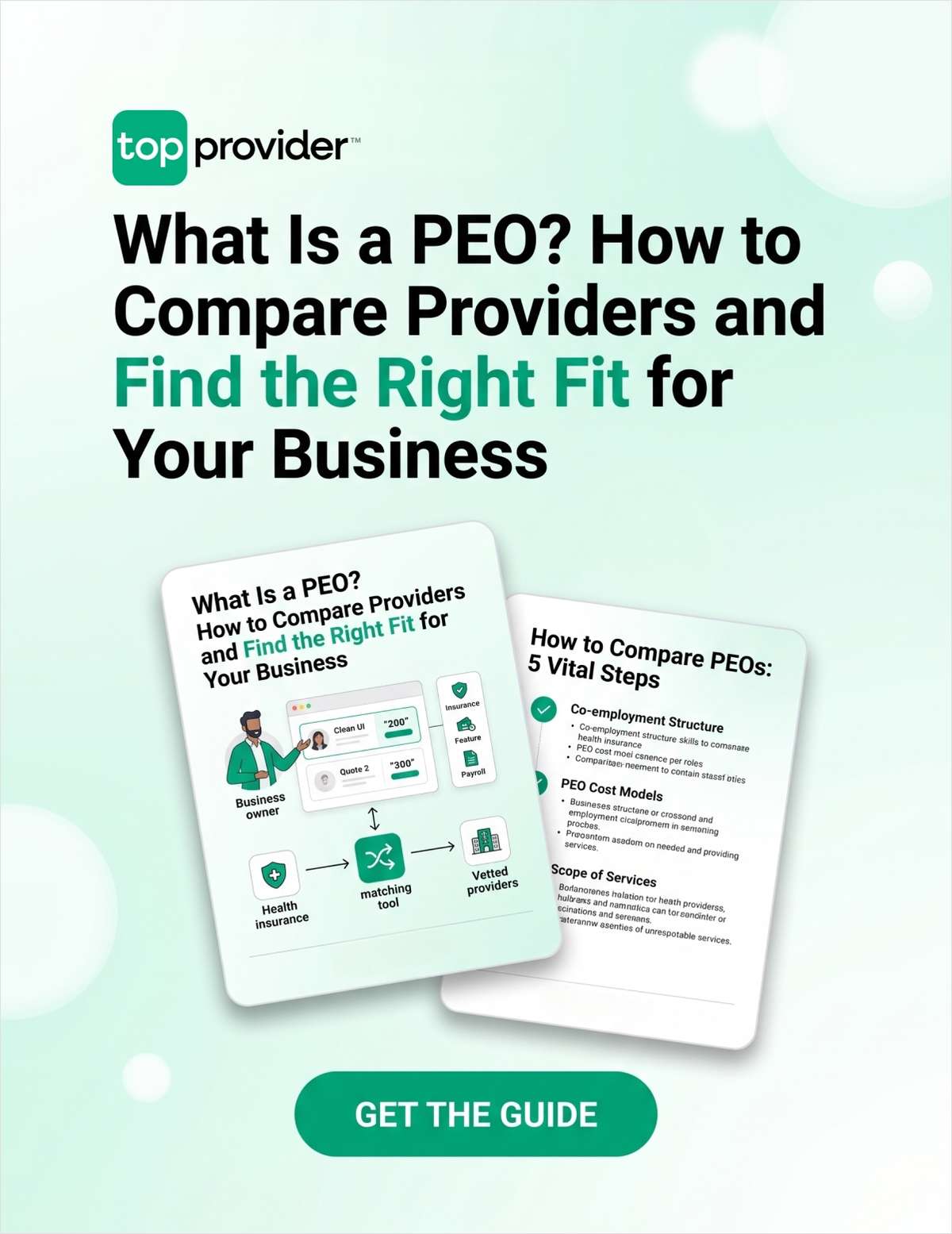
"What Is a PEO? How to Compare Providers and Find the Right Fit for Your Business"
Small businesses overpay for health insurance because they lack the buying power of larger companies. A PEO fixes that, but with hundreds of providers offering different pricing, services, and contract terms, finding the right one is the real challenge. This guide explains how PEOs work, what they cost, and how to compare providers side by side so you can make the right choice.
Health insurance is one of the biggest expenses for small and mid-sized businesses, and it's one of the hardest to control. If you've looked into Professional Employer Organizations (PEOs), you already know they can give your company access to enterprise-level benefits at significantly lower rates. But here's the part most guides skip: the PEO market has hundreds of providers, each with different pricing models, service bundles, and contract terms. Knowing that a PEO can help is only half the equation. The other half is finding the right one without spending weeks collecting proposals and sitting through sales demos.
This guide covers both sides. It explains exactly how PEOs work, what they cost, and what to look for when evaluating providers. And when you're ready to take the next step, Top Provider's free matching tool connects you with vetted PEO providers tailored to your business size, industry, and priorities, so you can compare real quotes side by side instead of starting from scratch.
Here's what the guide breaks down:
How the PEO model actually works. The co-employment structure confuses a lot of business owners. This section clears it up and explains what you control, what the PEO handles, and how the relationship is structured day to day.
Why PEOs can offer dramatically lower insurance rates. There's a specific reason PEO clients get access to benefits packages that would normally be out of reach. The guide explains the mechanics behind it and what kind of savings you can realistically expect.
The full scope of PEO services, and where providers differ. PEOs cover more than just insurance, but not every provider covers the same things or bundles them the same way. This section maps out what's available so you know the right questions to ask before signing anything.
What PEOs actually cost, and why pricing is harder to compare than it looks. There are two common pricing models, and the gap between the cheapest and most expensive providers is wider than you'd think. The guide explains what drives the variation and what to watch for in proposals.
How to evaluate providers without wasting weeks on research. There are specific credentials, certifications, and red flags that separate strong PEO providers from the rest. The guide walks through what to prioritize so you're not starting from zero.
That's exactly the kind of comparison that Top Provider was built for. Instead of researching providers one by one, you answer a few quick questions about your team size, location, industry, and priorities. Top Provider matches you with up to four PEO providers that fit your specific needs, so you can compare real proposals and make a confident decision without the runaround.
Read the full guide, then use Top Provider's free matching tool to compare PEO providers tailored to your needs. It takes less than 60 seconds.
Offered Free by: Top Provider
See All Resources from: Top Provider
Recommended for Professionals Like You: