
Request Your Free eBook Now:
"Advancing Fish Passage and Biodiversity in North America's Hydroelectric Landscape"
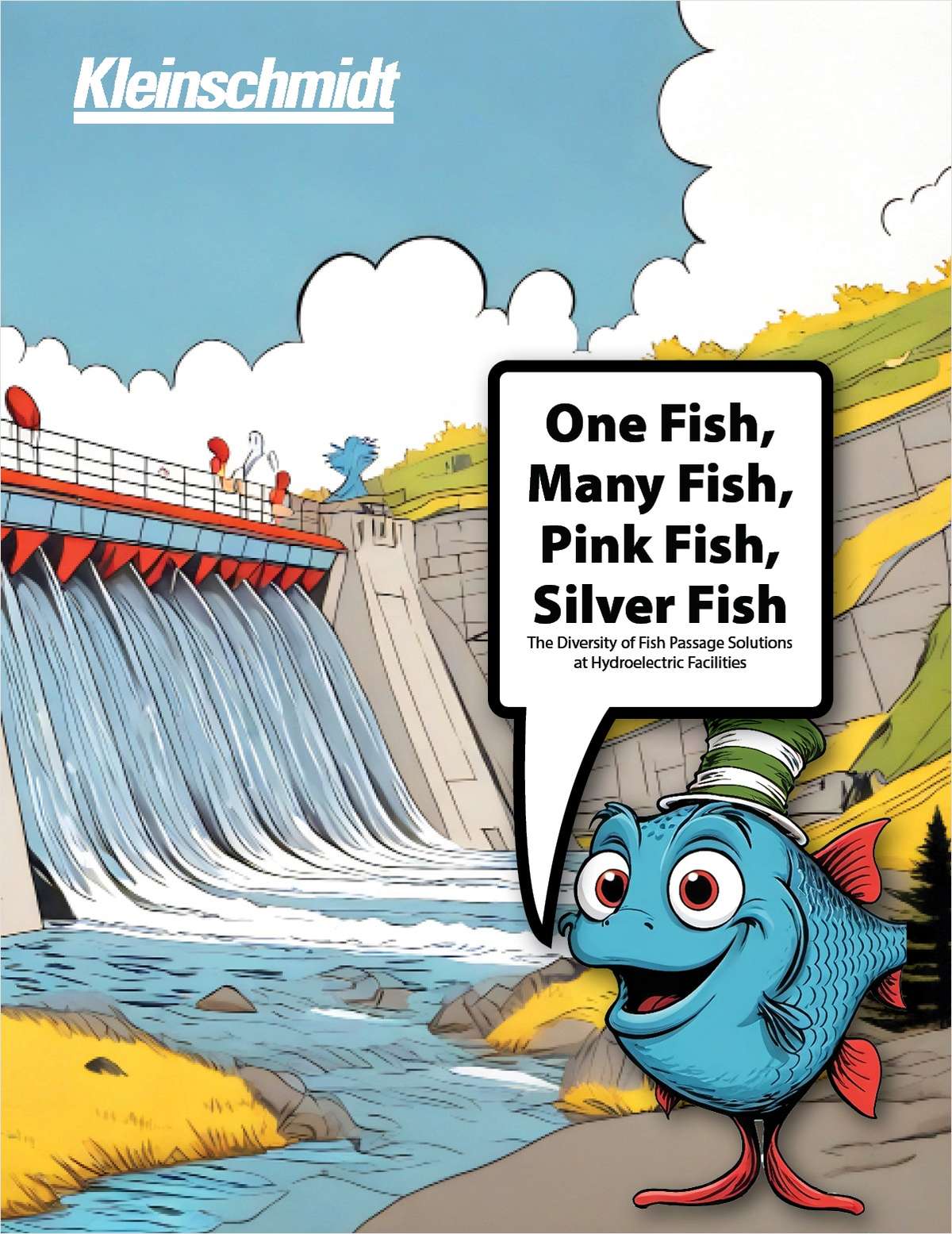
One Fish, Many Fish, Pink Fish, Silver Fish: North America’s rivers are home to thousands of fish species, each with unique life histories and migratory needs. As hydroelectric facilities modernize and regulatory expectations evolve, understanding the intersection of ecology, engineering, policy, and community values is essential. This brief explores solutions that protect biodiversity, meet regulatory requirements, and help utilities advance both ecological and operational performance.
Waterways are living systems, and North America’s rivers support some of the most diverse freshwater fish communities on earth. With more than 1,000 fish species across Canada and the United States, migratory fish depend on unobstructed passage within and between watersheds to complete their life cycles. Across North America, dam owners are working collaboratively to develop practical, science-driven solutions that enhance habitat connectivity and support healthy fish migrations.
This content takes a comprehensive look at fish passage solutions at hydroelectric facilities, integrating biology, engineering, and policy in ways that resonate with regulators, project owners, environmental planners, and community stakeholders across Canada and the U.S.
What makes this thought leadership distinctive is its tone. Inspired by the rhythmic, imaginative style of Dr. Seuss, the content uses playful narrative elements to make a technically complex topic more approachable and memorable, without compromising scientific integrity or engineering rigor. The result is a rare combination: engaging storytelling layered over technically sound analysis, regulatory insight, and fielded design principles.
At the heart of the issue is the recognition that one size does not fit all:
• Fish species differ widely in swimming ability, behavior, attraction cues, migratory timing, and habitat needs.
Effective solutions begin with understanding that biological diversity and hydraulic performance are interdependent — and that passage systems must be tailored to site conditions and species-specific requirements.
This content frames fish passage through three lenses:
1. Biology-Driven Engineering
Traditional hydraulic criteria: velocity, depth, turbulence remain essential, but they are only part of the equation. Fish are active organisms making decisions based on energy conservation, environmental cues, and river conditions. Modern modeling approaches increasingly simulate fish as dynamic agents interacting with flow fields, offering deeper insight into how passage systems actually perform in real-world conditions.
2. Technologies for Upstream and Downstream Passage
Upstream passage systems, including ladders, lifts, and nature-like fishways, must address both attraction and navigation challenges in complex hydraulic environments. Downstream solutions focus on reducing turbine entrainment, injury, and delayed mortality through bypass systems, screening, behavioral guidance, and adaptive monitoring.
This content explores how design innovation, monitoring technology, and performance evaluation tools can be integrated to improve survival outcomes while maintaining operational reliability.
3. Regulatory Frameworks and Conservation Strategy
Across North America, regulatory expectations continue to evolve. In both Canada and the United States, agencies and stakeholders increasingly focus on ecological outcomes, long-term watershed health, and transparent science-based decision-making. Collaboration with regulators, Indigenous communities, conservation groups, and project owners is no longer optional, it is foundational to durable project success.
By blending technical insight with a creative narrative voice, this thought leadership piece expands the audience for fish passage discussions. It invites engineers, environmental scientists, regulators, and community partners into the conversation, while maintaining the depth and accuracy required for informed decision-making.
Key takeaways include:
• Why species-specific, site-specific design drives better ecological and operational outcomes.
• The distinct engineering and biological considerations for upstream versus downstream passage.
• How regulatory frameworks in Canada and the U.S. influence design strategy and long-term project viability.
• Emerging tools and technologies that improve performance evaluation and adaptive management.
• Practical guidance for developing fish passage strategies that balance energy production, biodiversity protection, and stakeholder expectations.
In an era defined by climate resilience, aging infrastructure, and heightened environmental awareness, hydropower must evolve alongside ecological science. This thought leadership demonstrates that advancing fish passage is not simply about compliance, it is about leadership. And sometimes, leadership can be both technically rigorous and refreshingly creative.
Offered Free by: Kleinschmidt Associates
See All Resources from: Kleinschmidt Associates
Recommended for Professionals Like You: